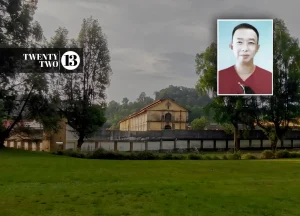


Taiping Prison is unsafe and not conducive for both inmates and staff. The Prison Department has also learnt its lesson and is against gazetting older prisons, such as Taiping, as heritage buildings.
These were among the statements made by witnesses testifying at the Human Rights Commission of Malaysia (Suhakam) public inquiry into alleged human rights violations at Taiping Prison on Jan 17.
Azlan Abdul Aziz, a building surveyor with the Perak branch of the Public Works Department (PWD), said the department had conducted three inspections of Taiping Prison in 2012, 2014 and 2022 – all concluding that it was in critical need of a full upgrade.
It is alleged that 60 prison officers beat and kicked more than 100 inmates who resisted being moved from Hall B, where they were being processed, to Block E. One inmate, Gan Chin Eng, died.
Azlan said he was surprised to learn Block E was used on the day of the incident, as he believed it had been unoccupied since 2020. Although some prison officers testified that only the first floor – referred to by some as the ground floor – could be used, he maintained that, to the best of his knowledge, this was not the case.
He was testifying at the inquiry chaired by Suhakam chairman Datuk Seri Mohd Hishamudin Md Yunus and commissioner Dr Farah Nini Dusuki. Azlan said he was among PWD staff who inspected the prison in 2022 and recommended that Block B be shut down, while Blocks C and E required repairs before use. He was therefore shocked to learn that inmates had been moved from Hall B to Block E.
When asked by Suhakam’s assisting inquiry officer, Mohd Faiz Abdul Rahman, whether it was appropriate for Taiping Prison to remain in use, Azlan replied: “There are physical issues due to its age. The prison is not safe and not conducive to anyone.”
Mohd Faiz: For anyone? Do you mean inmates and staff?
Azlan: Yes. Inmates and staff. The walls are porous, and the limestone dust (from the walls) and chipping paint are health hazards.
Mohd Faiz: So, it is not appropriate for Block E to have inmates?
Azlan: It is not appropriate because a technical report was issued. If they wanted to use Block E, they needed to carry out repairs or a major renovation.
Mohd Faiz: Were there any signboards stating that Block E could not be used?
Azlan: That is beyond my knowledge, but when we visited the prison, there was a tape across the entrance.
Mohd Faiz: What kind of tape?
Azlan: Red and black. We were made to understand Block E had not been in use since 2020, although there were officers on duty.
Mohd Faiz: You did not receive any application to repair Block E?
Azlan: No. We assumed that was because it was empty.
Mohd Faiz: Before testifying, did you know about the incident on Jan 17?
Azlan: Yes, but I did not know that Block E was where the prisoners were sent. It was supposed to be empty.
Azlan also said the cells still relied on the bucket system, and a proposal to build outdoor toilets was rejected for security reasons.
“As Taiping Prison was classified as a heritage building, there were limits to how much modernisation could be done,” he said.
Meanwhile, Deputy Commissioner General of Prisons (Management) Hafidz Othman said he hoped remand prisoners could be allowed home detention to reduce overcrowding.
Hafidz said there were 90,601 inmates across Malaysian prisons – including 28,200 on remand – but the capacity was only 76,311. He added that 13,671 were foreign prisoners.
“We have suggested that those in remand be allowed home detention as they are innocent until proven guilty,” he said.
“We have had discussions with the Attorney-General and Chief Justice about reducing bail for some of them.
“The problem is, some of those accused of breaking and entering, or theft, do so because they lack money. So, it is pointless to ask for bail, even as low as RM500.”
Asked about the problems at Taiping Prison, Hafidz said the department had learnt its lesson and was against gazetting older prisons as heritage buildings.
“We assumed we would get extra funding and privileges, but that has not been the case,” he said.
“It is difficult having two agencies – the Prison Department and National Heritage Department – as there are too many rules to follow when we need to make repairs.
“If the Heritage Department wants to gazette older prisons, then we should get a new one.”
He added it would cost RM300 million to RM500 million to build a new prison.
Hafidz said older prisons such as Seremban (809 inmates), Penang (1,347), Alor Setar (2,128), Taiping (1,220) and Pengkalan Chepa (2,906) – housing 9.28 per cent of the prison population – still used the bucket system.
Meanwhile, Ruzairy Arbi, director of the Heritage Register Division at the National Heritage Department, said Taiping Prison officers had requested major renovations in 2019, but no follow-up had taken place.
The Suhakam inquiry, held at its headquarters in Kuala Lumpur, continues tomorrow.